Pitt Games Reading Group
information regarding the Pitt Games Reading Group and our next meeting
Welcome to the Pitt Games Reading Group main page! Below you will find a mailing list sign-up sheet, general information about the group, details about our next meeting, and links to previous meetings.

Sign-Up / Mailing List
If you intend to attend, please sign up for our mailing list!
General
The Pitt Games Reading Group meets once or twice per semester and is open to students and faculty/staff at the University of Pittsburgh.
When we meet, we will discuss a game played in advance of the meeting, and then consider its design, story, mechanics, aesthetic, and more. We will also discuss a supplemental reading that gives useful context to the game under focus.
This group is a great opportunity for aspiring designers, avid game players, particularly unique game enjoyers, and those interested in the study of games to gather and explore the medium together, through examples that engage us in novel and unexpected ways.
Next Meeting
Spring 2026 (March)
Meeting Details: March 27th, 2026, 4:00 – 5:30PM, CL 512
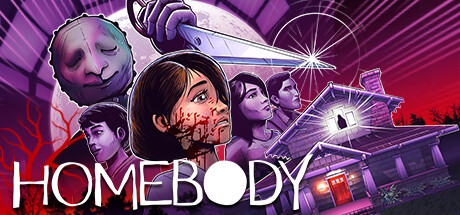
Game: Homebody (2023) by Game Grumps, Jory Griffis, and Leighton Gray
Reading: None
Description: For our second revitalized meeting of the Pitt Games Reading Group, we seek new horizons in our conversations about video games following our escape from the Starship Titanic. Unfortunately, we appear to have found ourselves in another kind of puzzle-filled locale, this time trying to navigate our player-character’s relationship to her friends and equally frightening threats to their safety.
For our March 2026 meeting, we will be discussing Homebody (2023), “a time loop horror puzzle game from Game Grumps.” This game offers a contemporary spin on survival horror classics such as Resident Evil* (1996) and Clock Tower (1996), mixing the aesthetics and mechanics of its inspirations with a personal, character-driven focus. The combination of smaller, more immediate puzzles and narrative-driven problems that require thinking across rooms, floors, and time enables a story about social anxieties and complex interpersonal relationships. As a result, Homebody should appeal to fans of thoughtfully written psychological horror, the survival horror genre, and/or the recent resurgence of PSX-influenced horror titles (e.g. Mouthwashing, Signalis, or Crow Country).
Additionally, one of the game’s two co-writers, Leighton Gray, will be virtually calling in to speak to students in one of Dr. Koob’s courses. Her experience as a writer for video games and her work on Homebody in particular will give us insight into the game itself, the process of writing for video games, and working as a writer and creator for video games as part of a development team. Those who attend this PGRG meeting will be invited to attend her virtual visit, where you will have the opportunity to ask her questions!
Discussion Questions:
- How do we come to understand Emily and her relationships to others through the game’s looping narrative structure? What do we learn within each loop, and then what do we learn about Emily across these loops?
- How many puzzles (both within loops and across loops) were you able to solve on your own? Which puzzles had you stuck, or needing to look up solutions online? Did you feel that the puzzles effectively contributed to the game’s narrative and design goals?
- How does Homebody represent topics such as social anxiety, mental health, and interpersonal relationships? How are these topics explored through writing, mechanics, and other elements of design? Are there other contemporary issues you see being explored?
- How does Homebody make you think about identity and how your sense of identity relates to others? How does it make you think about the player character’s identity, or your own?
Previous Meetings
To find information on previous meetings, please visit our archive page.
Contact
For more information, please reach out to me or Dr. Nathan Koob by email: addison[dot]eldin[at]pitt[dot]edu / NBK18[at]pitt[dot]edu
Acknowledgments
This club was started by Justin Bortnick, who kindly offered several reference materials that were used for this page, including the logo.